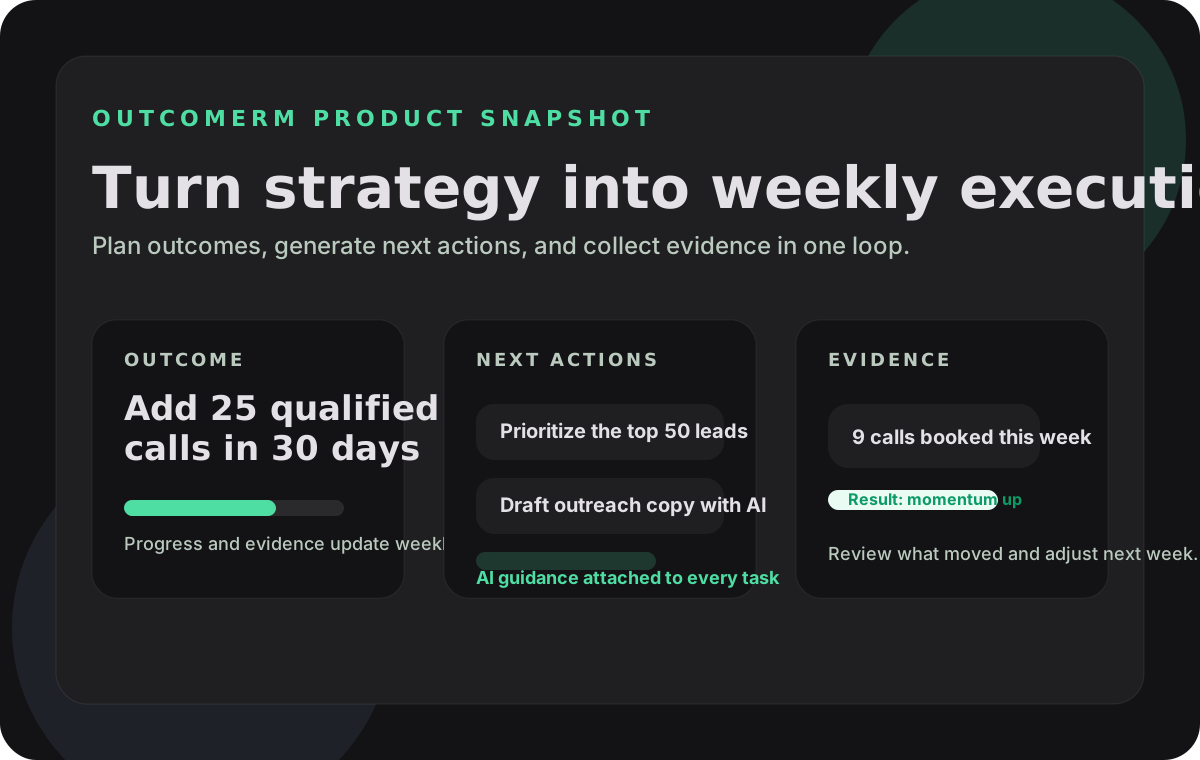
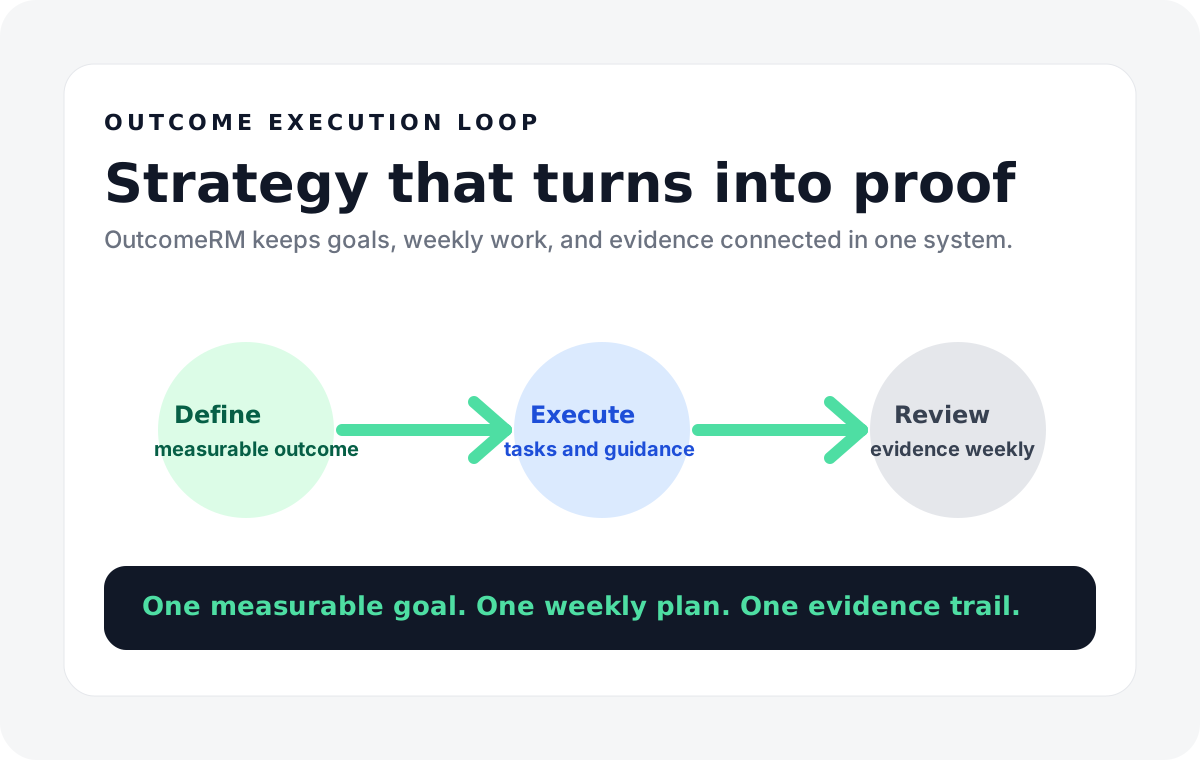
If you are searching for a small business marketing plan, the most useful answer is not a long theory deck.
You need a marketing plan for a small business that answers:
- what result are we trying to get?
- which channels matter most?
- what work happens this week?
- what numbers prove the plan is working?
That is what makes a small business marketing plan useful instead of decorative.
Quick answer
A small business marketing plan should include:
- one measurable business goal
- one clear audience
- one core offer
- two to three primary channels
- weekly actions
- a simple KPI scorecard
Anything more complex than that often becomes shelfware.
If you are looking for marketing plans for small businesses, this is the simplest structure that usually works.
Start with one business outcome
Do not start with "we need more marketing."
Start with one result, such as:
- generate 25 more leads per month
- book 10 new clients in 30 days
- increase repeat orders by 15%
- drive 20 more quote requests this quarter
That outcome should drive the plan.
Pick the audience before the channels
Many small businesses choose channels first and audience second.
That usually creates wasted effort.
Define:
- who buys most often
- who is worth the most over time
- who has the clearest buying trigger
For example:
- local bakery: nearby repeat buyers plus wholesale cafes
- cleaning business: busy households and property managers
- agency: founder-led service businesses with a lead-generation problem
Choose 2 to 3 channels, not 8
One of the fastest ways to ruin a small business marketing plan is trying to be everywhere.
For most small businesses, the plan should focus on a few channels like:
- local SEO
- email follow-up
- referral generation
- paid search
- social proof and reviews
- direct outreach
The right channel mix depends on how the business gets bought.
What a small business marketing plan should include
Goal
What are you trying to move in the next 30 to 90 days?
Audience
Who are you targeting first?
Offer
What exactly are you promoting?
Channels
Which channels are doing the work?
Weekly campaigns
What happens this week, not someday?
KPIs
How will you know whether the plan is working?
Sample small business marketing plan
If you searched for a sample small business marketing plan or "marketing plan small business" example, use this as the practical version.
Here is a simple example for a bakery:
Goal
Increase preorders and recurring custom cake orders by 25% in 90 days.
Audience
Families planning birthdays, local event buyers, and nearby offices ordering desserts.
Offer
Custom cake packages plus weekly preorder promotions.
Channels
- Google Business Profile
- local SEO pages
- email and SMS preorder reminders
Weekly actions
- post fresh product photos
- request three reviews from happy customers
- update one local landing page
- send one preorder email to the customer list
KPIs
- inquiries
- preorder volume
- repeat customer rate
If you want the bakery-specific version, read Bakery Business Growth Strategy.
If you want another sample format, read Small Business Marketing Plan Example.
If you want the blank structure first, use Small Business Marketing Plan Template.
If you want more niche versions of this plan structure, also read Marketing Plan for a Moving Company, Marketing Plan for a Cleaning Business, and Marketing Plan for a Small Local Business.
Small business marketing plan vs random marketing activity
This is the real difference:
Random marketing activity sounds like:
- post more on Instagram
- run some ads
- send an email when there is time
A real small business marketing plan sounds like:
- improve Google Business Profile and location pages to increase inbound searches
- send one referral email per month to past customers
- launch one seasonal offer with a landing page and follow-up email
- track quote requests, booked calls, and repeat buyers weekly
The plan ties the activity to a measurable result.
Small business marketing online plan
If your business depends heavily on digital demand, your small business marketing online plan should still stay simple.
That usually means:
- one search channel
- one follow-up channel
- one proof or retention channel
For example:
- Google search and local SEO for discovery
- email or SMS for follow-up
- reviews and referral asks for trust and repeat demand
Do not turn the online plan into ten disconnected channels. Pick the few that can actually move revenue.
If you want the query-specific versions of this idea, also read Internet Marketing Plan for Small Business and Affordable Marketing Plan for Small Business.
Should a small business use a one-page marketing plan?
Usually yes.
A one-page format is often enough when:
- the owner still runs most of the work
- the channel mix is simple
- the planning window is 30 to 90 days
If you want that structure, read One-Page Marketing Plan.
If you want the fuller version, use Small Business Marketing Plan Template.
Can AI help small businesses create a marketing plan?
Yes, especially when the owner already knows:
- the main goal
- the offer
- the location
- the target customer
AI can then help turn that into:
- channel ideas
- campaign structure
- weekly tasks
- draft copy
- review questions
For the workflow, read How To Create a Marketing Plan With AI.
If you want the software-specific version, also read AI Marketing Plan Generator for Small Business and Best Marketing Plan Software for Small Business.
Final takeaway
The best small business marketing plan is not the longest one.
It is the one that makes next week obvious.
If you want to build that faster, start with the OutcomeRM templates, review the Small Business Marketing Plan Example, use the Small Business Marketing Plan Template, and compare Best Marketing Plan Software for Small Business if you want the software angle too. If your focus is digital channels or tighter budget constraints, also read Internet Marketing Plan for Small Business and Affordable Marketing Plan for Small Business.