If you are searching for a marketing plan example, marketing plan examples, format, definition, or a usable example marketing plan, the most useful answer is this:
A marketing plan is the working system a business uses to get attention, generate demand, convert customers, and measure results over a defined period of time.
It is not just a list of ideas.
A marketing plan that actually gets customers should answer:
- who you are trying to reach
- what you are selling
- which channels you will use
- what campaigns you will run
- what actions happen this week
- what budget and timeline you have
- how you will measure success
Quick definition
A marketing plan is a structured operating plan for how a business will attract, convert, and retain customers.
For a small business, it usually includes:
- one business goal
- target audience
- offer or positioning
- channels
- campaign ideas
- weekly actions
- budget
- metrics and review rules
That is the practical definition most owners need.
What most marketing plan pages miss
Most marketing plan articles stop at structure.
They explain:
- audience
- goals
- channels
- budget
But they do not explain the part that decides whether the plan works:
- who owns each action
- how often the action happens
- what result you expect from that action
- when you review the numbers
- what you stop doing if the action is not working
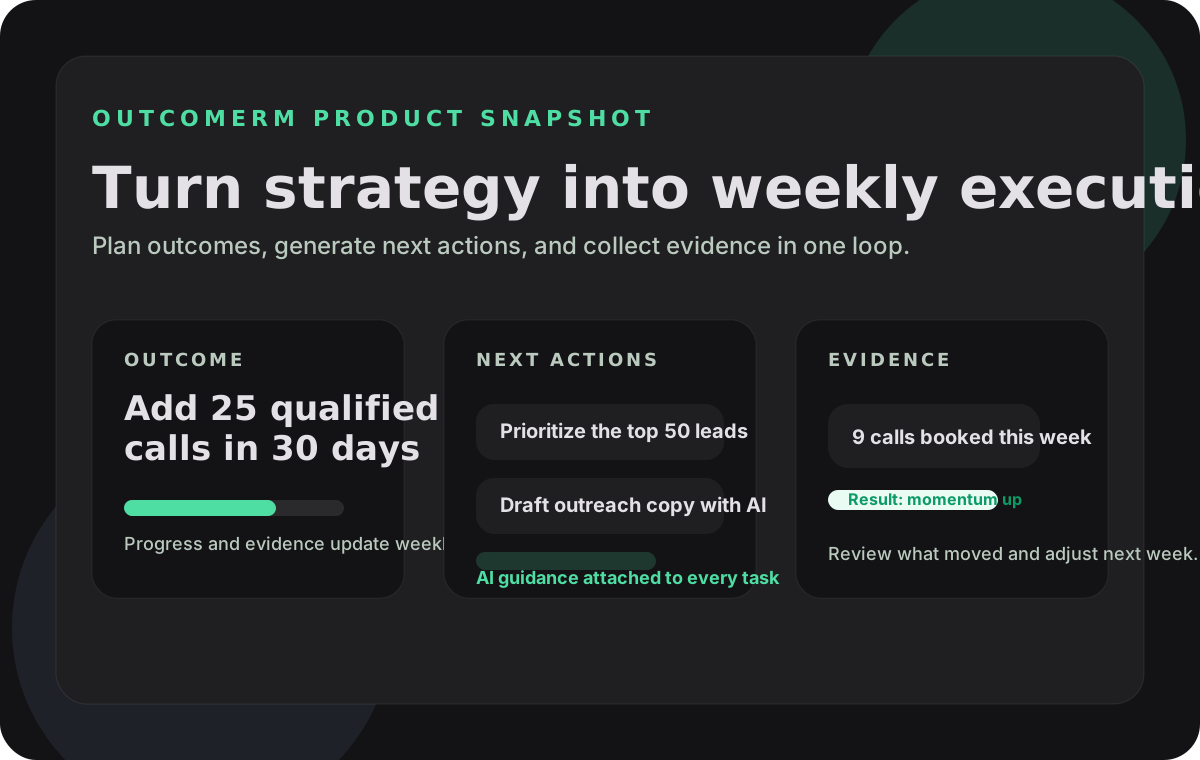
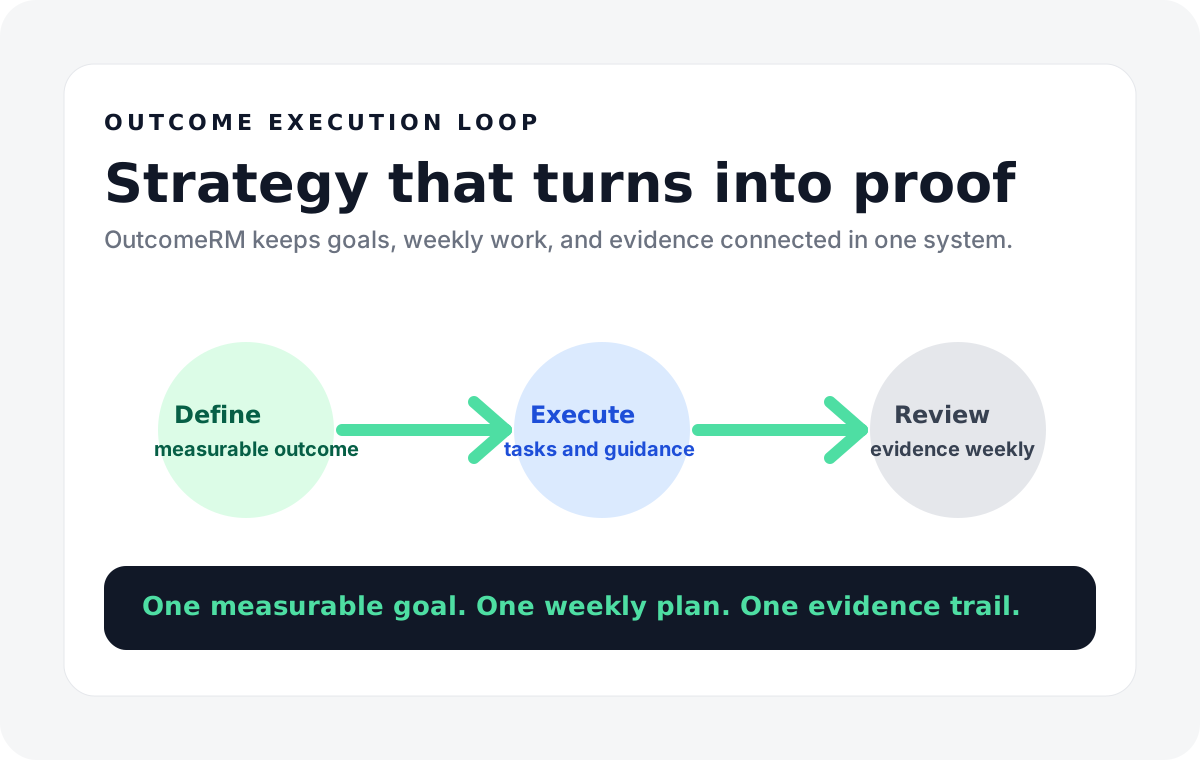
That is the execution layer.
That is also where most marketing plans fail. They stay as documents instead of becoming weekly operating systems.
If you want the plan to drive customers instead of just looking organized, you need both:
- the plan structure
- the weekly execution system
Marketing plan vs marketing strategy
This is one of the most common search questions, and the distinction matters.
Your marketing strategy is the bigger logic:
- who you are targeting
- how you are positioned
- what advantage you are trying to create
Your marketing plan is the operating layer:
- which channels you are using this quarter
- what campaigns are going live
- what content or outreach will happen this week
- which numbers you are tracking
Strategy sets direction.
The plan turns that direction into scheduled work.
Marketing plan format that gets customers
There is no single perfect marketing plan format, but the strongest format for most small businesses looks like this:
1. Outcome
One short paragraph explaining the business goal, the time frame, and the starting point.
Example:
"Increase monthly inbound leads by 30% over the next 90 days through local SEO, email follow-up, and targeted referral outreach."
2. Audience
Define:
- primary customer type
- highest-value segment
- buying trigger
- common objection
3. Offer
Clarify:
- what you are selling
- why it is valuable
- why now
- why your business instead of the alternatives
4. Channels
Pick the few channels you will actually run, such as:
- local SEO
- paid search
- direct outreach
- social content
- referrals
5. Campaigns and actions
Break the work into campaigns, not vague hopes.
Example:
- improve Google Business Profile
- launch spring offer
- send referral email to past customers
- publish two service pages
6. Budget
List:
- ad spend
- tools
- freelancers or contractors
- content/design cost
7. Weekly action rhythm
Use weekly planning instead of a giant annual chart if you are a small team.
Define:
- what happens daily
- what happens weekly
- who owns it
- how it gets reviewed
8. KPIs and decision rules
Track a small set of metrics:
- leads
- booked calls
- repeat orders
- conversion rate
- cost per lead
Then define what happens next.
Example:
- if referrals produce lower-cost leads than paid ads, increase referral effort
- if one channel produces no movement after 30 days, cut or change it
- if one offer converts better than the rest, push it harder
That last part is what turns a marketing plan into a growth system.
Marketing plan template
Here is a simple marketing plan template you can adapt:
If you want the small-business version of this structure, use Small Business Marketing Plan Template.
Marketing goal
- target:
- deadline:
- baseline:
Audience
- primary segment:
- secondary segment:
- main pain point:
- buying trigger:
Offer
- core offer:
- supporting offer:
- differentiator:
Channels
- channel 1:
- channel 2:
- channel 3:
Campaigns
- campaign 1:
- campaign 2:
- campaign 3:
Weekly actions
- week 1:
- week 2:
- week 3:
- week 4:
Budget
- ad spend:
- software:
- contractor or creative:
KPIs
- lead target:
- conversion target:
- revenue target:
Turn the template into a system
This is the part that makes OutcomeRM fit the topic.
Most marketing plans fail because they stay static.
To make the template useful, turn it into a weekly operating system:
- convert each channel into recurring actions
- define the expected result of each action
- assign an owner and due date
- review the KPI movement every week
- double down on what works and cut what does not
That means instead of writing:
- "Improve referrals"
you write:
- ask every completed customer for one review and one referral within 24 hours
- send one referral reminder email every Friday
- track referral conversations, quote requests, and closed clients weekly
That is the difference between a marketing plan document and a marketing execution system.
If you want that execution layer, start with the OutcomeRM templates or create an account in OutcomeRM and turn one goal into weekly actions and KPI reviews.
Marketing plan example for a moving company
If you are searching for a marketing plan for a moving company, the plan should focus on demand capture and fast follow-up.
Goal
Get 10 new moving clients in 30 days.
Audience
- local residential movers
- apartment movers
- last-minute moving requests
Channels
- Google Business Profile
- Facebook Marketplace and local Facebook groups
- Craigslist service ads
- referral asks after completed jobs
Weekly actions
- post one offer in 5 local Facebook groups each weekday
- refresh 3 Craigslist ads per week
- ask every completed customer for one review and one referral
- answer every quote request within 5 minutes during business hours
Action to expected result
- Facebook group posts: 3 to 7 quote requests per week
- Craigslist ads: 2 to 5 leads per week
- referral asks: 1 to 2 extra opportunities per week
- fast follow-up: higher close rate on existing demand
These numbers vary by market, offer, and execution quality, but this is how the plan should be written: action tied to expected result.
If you want the dedicated version of that playbook, read Marketing Plan for a Moving Company.
Marketing plan example for a cleaning business
Here is a simpler local service example.
Goal
Add 12 recurring residential clients in 90 days.
Audience
Busy dual-income households within 10 miles of the service area.
Offer
First clean discount plus recurring biweekly package.
Channels
- Google Business Profile optimization
- local SEO service pages
- email follow-up to quote requests
- referral push to existing clients
Weekly actions
- publish one location-specific page
- ask five happy clients for reviews
- follow up every quote request within 24 hours
- send one referral reminder email
KPIs
- quote requests
- booked estimates
- recurring clients won
If you want the dedicated version of that plan, read Marketing Plan for a Cleaning Business.
For a deeper version, read Cleaning Business Marketing Strategy.
Marketing plan example for a small local business
If you run a bakery, salon, gym, clinic, or local service business, your marketing plan usually needs:
- one repeat-customer channel
- one local discovery channel
- one referral or partnership channel
For example, a bakery might run:
- Google Business Profile posts and review collection
- seasonal email campaigns
- wholesale outreach to cafes and offices
For the broader local-business version, read Marketing Plan for a Small Local Business.
For a bakery-specific version, read Bakery Business Growth Strategy.
Action to result examples you can actually use
Most businesses do not need more theory. They need examples of what to do next.
Here are simple action-to-result patterns:
- publish one location page for a core service -> more local search impressions over the next 2 to 6 weeks
- follow up every quote request within 5 to 15 minutes -> better appointment and close rate
- ask for reviews after every completed job -> stronger local map visibility and higher trust
- send one referral email to past customers weekly -> more referral conversations and lower-cost leads
- post one offer in a niche community daily -> more direct inquiry volume
You should write your marketing plan in that format:
- action
- frequency
- owner
- expected result
- actual result
That is what makes the plan measurable.
Common marketing plan strategies
Another common search is "marketing plan strategies."
In practice, a good marketing plan usually combines a few strategy types:
- demand capture: SEO, paid search, directories
- demand creation: content, education, email, video
- conversion improvement: landing pages, offers, follow-up
- retention: repeat purchase flows, remarketing, referral asks
- partnership growth: local partners, wholesale accounts, channel partners
The plan should show which of these you are prioritizing first and what actions support that priority.
When to use a one-page marketing plan
If you are a small team, you often do not need a giant deck.
A one-page marketing plan works well when:
- the business is under $5M ARR or equivalent local revenue scale
- there are only 1 to 3 owners of the work
- the next 30 to 90 days matter more than the next 12 months
If you want that shorter version, read One-Page Marketing Plan.
Can AI help build a marketing plan?
Yes, if the inputs are clear and the output is tied to execution.
AI is useful for:
- organizing the plan structure
- drafting channel ideas
- generating campaign options
- translating one business goal into weekly actions
AI is weak when:
- the goal is vague
- the audience is unclear
- the offer is weak
- there is no review loop after the plan is created
If you want the step-by-step workflow, read How To Create a Marketing Plan With AI.
Final takeaway
The best marketing plan is not the prettiest document. It is the one that makes these things obvious:
- what result you want
- which channels matter most
- what work happens this week
- what result each action is supposed to create
- which numbers prove progress
- what you will change if the plan is not working
If you want a marketing plan that behaves like a system instead of a document, use the OutcomeRM templates or create your account and turn one business goal into weekly actions, measurable milestones, and evidence-based reviews.