Growing a bakery is not just about baking more product. It is about building a repeatable system for demand, production, margin, and customer retention.
Many bakery owners hit the same wall: the product is good, the reviews are strong, and customers love the brand, but growth stalls because the business still depends on heroic effort from the owner.
If you want a bakery business growth strategy that actually scales, you need to manage four things at once:
- demand generation
- production efficiency
- pricing and margin discipline
- repeatable sales channels
If wholesale is the current bottleneck, go deeper with Bakery Wholesale Growth Strategy. If local visibility is the issue, use Bakery Local SEO Strategy.
If you are still getting the launch basics into shape, start with Bakery Startup Checklist before pushing growth harder.
If you want the simpler local-business planning version first, read Marketing Plan for a Small Local Business.
If your immediate question is expansion, use How to Expand Your Bakery Business.
Start with one commercial target
Pick one objective for the next 90 days. For example:
- increase monthly revenue from $12,000 to $20,000
- win 6 new wholesale accounts
- raise repeat customer rate by 25%
- improve gross margin on your top 10 products
This matters because "grow the bakery" is too vague to manage. A specific commercial target helps you decide what to optimize first.
Build around your most profitable products
Not every baked item deserves equal attention.
Before you invest in more marketing, identify:
- your highest-margin products
- your most reorder-friendly products
- your most operationally efficient products
For many bakeries, the hero product is not the one with the most likes on Instagram. It is the one that consistently sells, can be produced efficiently, and makes room for profit after labor and ingredient costs.
Fix the product mix before you chase more demand
If your menu is too broad, your bakery becomes harder to scale.
A tighter product mix helps you:
- reduce waste
- forecast inventory more accurately
- train staff faster
- speed up production
That creates margin and operational bandwidth, which makes future growth easier.
Use local SEO like a revenue channel, not a branding exercise
For a bakery, local search can create compounding demand.
Your basic checklist should include:
- a complete Google Business Profile
- fresh photos every week
- category optimization
- location-specific keywords on the website
- a review request system after positive customer experiences
Search terms like "bakery near me," "custom birthday cakes in Denver," or "wholesale pastries for cafes" often convert because the buyer already has intent. For the full local-search workflow, read Bakery Local SEO Strategy: How To Turn Local Search Into Repeat Orders.
Create two growth tracks: retail and wholesale
Most bakeries need both.
Retail growth
Retail gives you brand awareness, foot traffic, and community loyalty. Retail marketing usually works best when you focus on:
- seasonal launches
- preorder campaigns
- email and SMS reminders
- local content and neighborhood partnerships
Wholesale growth
Wholesale creates more predictable volume. If you want to grow faster, this channel is usually the unlock.
Start with a simple wholesale system:
- Build a short target list of cafes, restaurants, and specialty markets.
- Create a one-page line sheet with pricing and core products.
- Offer a sample drop for qualified locations.
- Follow up consistently for two to three weeks.
The key is consistency. One sample drop does not create a pipeline. A weekly cadence does.
If you want the full account-building system, read Bakery Wholesale Growth Strategy: How To Win More Cafe and Retail Accounts.
Track the metrics that actually improve profit
A bakery owner should know these numbers every week:
- revenue by product category
- gross margin by product
- average order value
- repeat order rate
- waste percentage
- labor hours per production run
These metrics tell you whether growth is healthy. Revenue without margin control often creates stress, not scale.
Systematize production before hiring aggressively
The first scale lever is usually process, not headcount.
Document:
- recipes by weight
- prep sequences
- opening and closing checklists
- packaging standards
- quality checks
That documentation does two things: it protects consistency and makes delegation possible.
The simplest marketing system for a growing bakery
If you only have a few hours each week, use this stack:
Weekly content
Post one behind-the-scenes story, one product-focused feature, and one customer proof point.
Email capture
Offer preorder reminders, launch access, or seasonal specials in exchange for email signup.
Review generation
Ask for reviews after strong in-store experiences, custom orders, and event catering.
Partnership outreach
Reach out to wedding planners, coffee shops, office managers, and local event venues.
Each of those channels supports the others. That is how traffic turns into revenue instead of just attention.
FAQ
What is the fastest way to grow a bakery?
For most owners, the fastest lever is a combination of stronger local SEO, a tighter menu, and a simple wholesale outreach system.
Should a bakery focus on retail or wholesale first?
Retail builds brand and cash flow, but wholesale often creates steadier volume. The right answer depends on your margin structure and production capacity.
What is the most important bakery KPI?
Revenue matters, but gross margin by product is often the metric that separates busy bakeries from profitable ones.
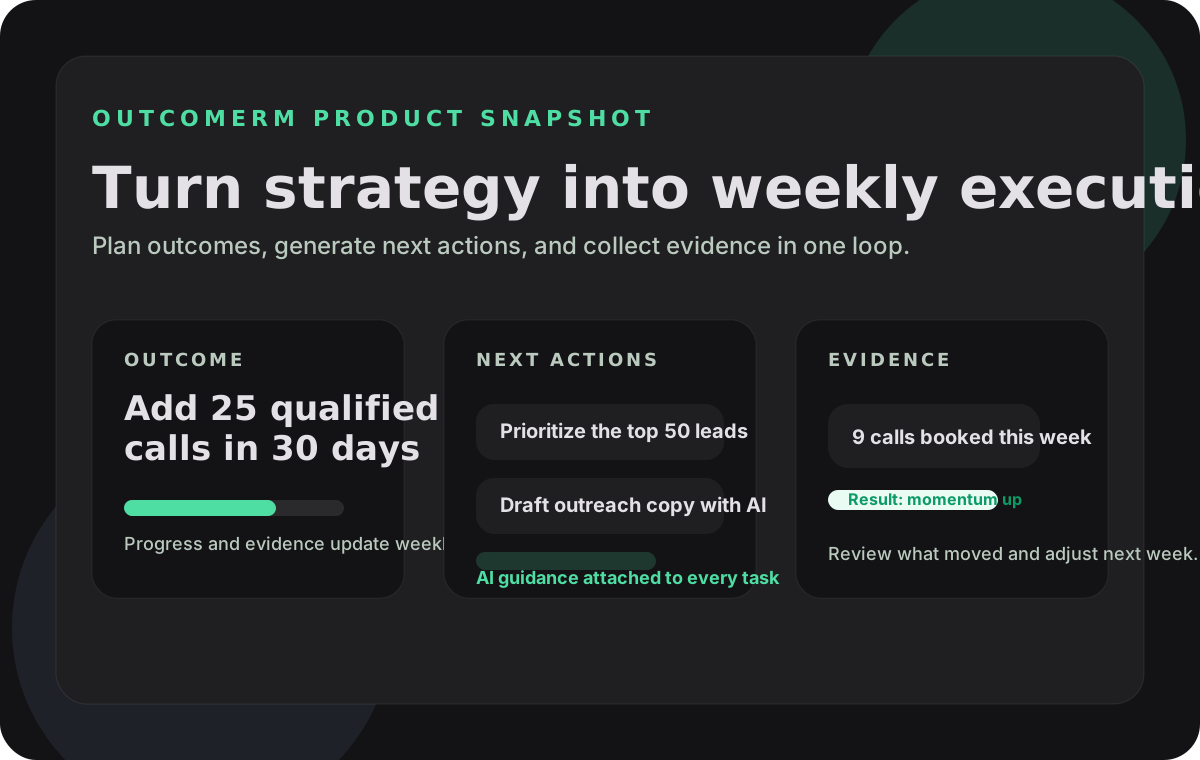
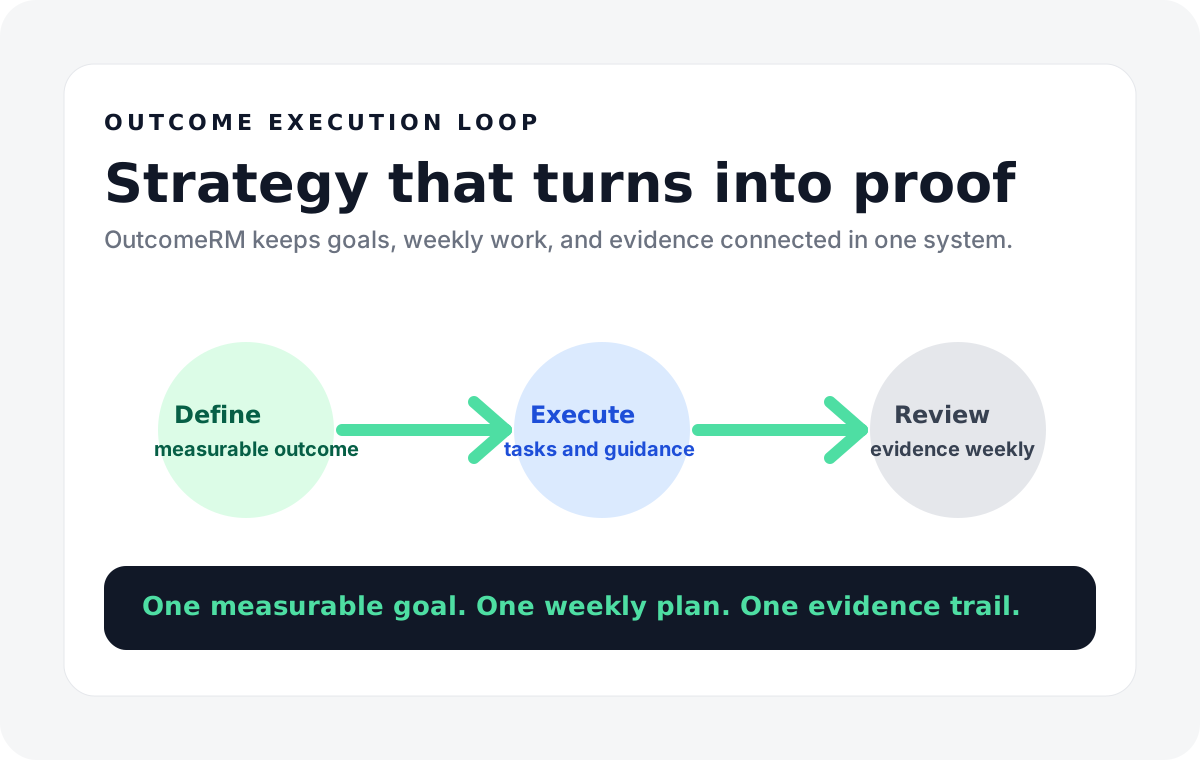
If you want to map your bakery target into a measurable execution plan, the OutcomeRM templates page is the fastest way to start with a goal instead of a guess. For broader planning context, also read Outcome-Driven Goals, Bakery Wholesale Growth Strategy, Bakery Local SEO Strategy, and How to Expand Your Bakery Business.