Most founders do not have a pipeline problem. They have an execution problem.
A traditional CRM helps you store contacts, log calls, and track deals. That is useful, but it is not enough when the real question is: what should the team do today to increase revenue this month?
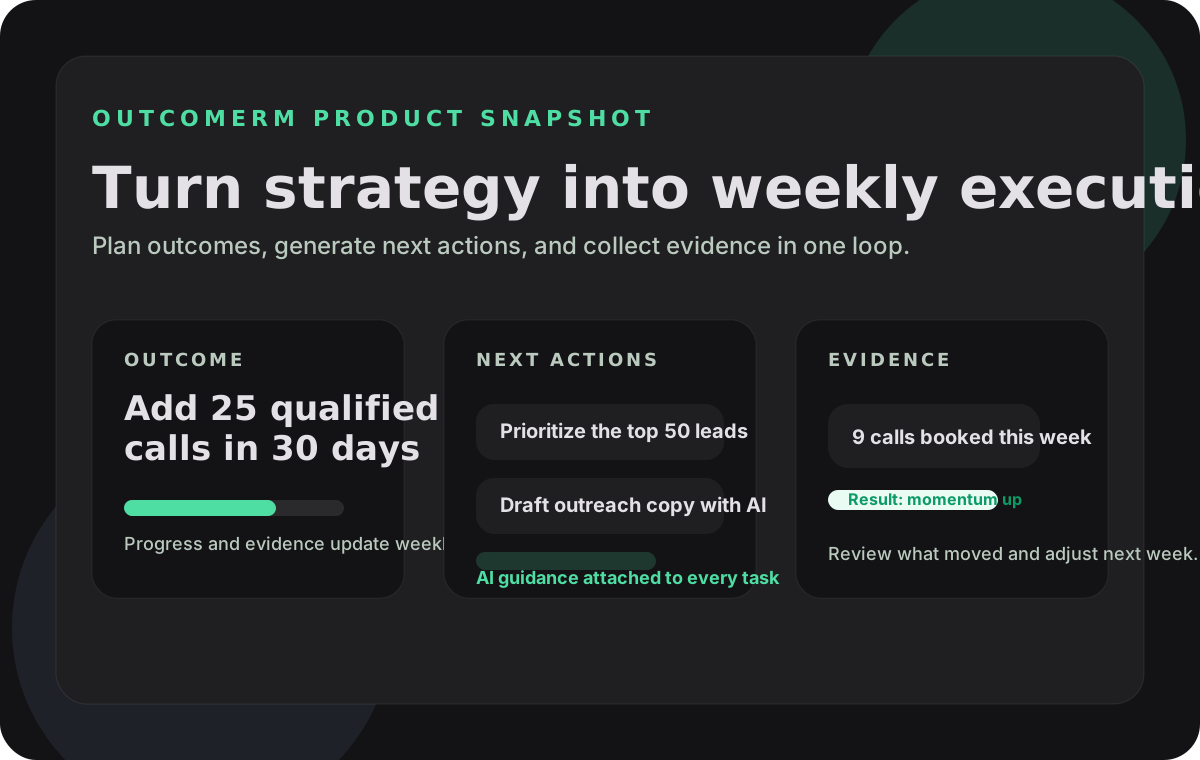
That is where an outcome CRM becomes different. Instead of organizing activity for its own sake, it ties daily work to a measurable target such as qualified pipeline, closed-won revenue, customer retention, or expansion.
What a traditional CRM does well
Traditional CRMs are strong at three things:
- Keeping contact and account data in one place.
- Giving sales teams a place to track stages and notes.
- Creating a historical record of what happened in the pipeline.
If you are running a sales team with a mature process, that foundation matters. The problem is that most early-stage and growth-stage teams stop there. They capture activity, but they do not convert that data into a clear operating rhythm.
Where traditional CRM workflows usually break
The most common failure mode is simple: the team confuses logged activity with meaningful progress.
You can have:
- 40 calls logged
- 120 emails sent
- 9 opportunities updated
...and still miss the quarter because none of those actions were tied to the leading indicators that actually mattered.
That is why many founders feel like the team is "busy but not moving." The CRM records work after it happens, but it rarely answers the forward-looking question: which action has the highest probability of creating the outcome we need next?
What an outcome CRM changes
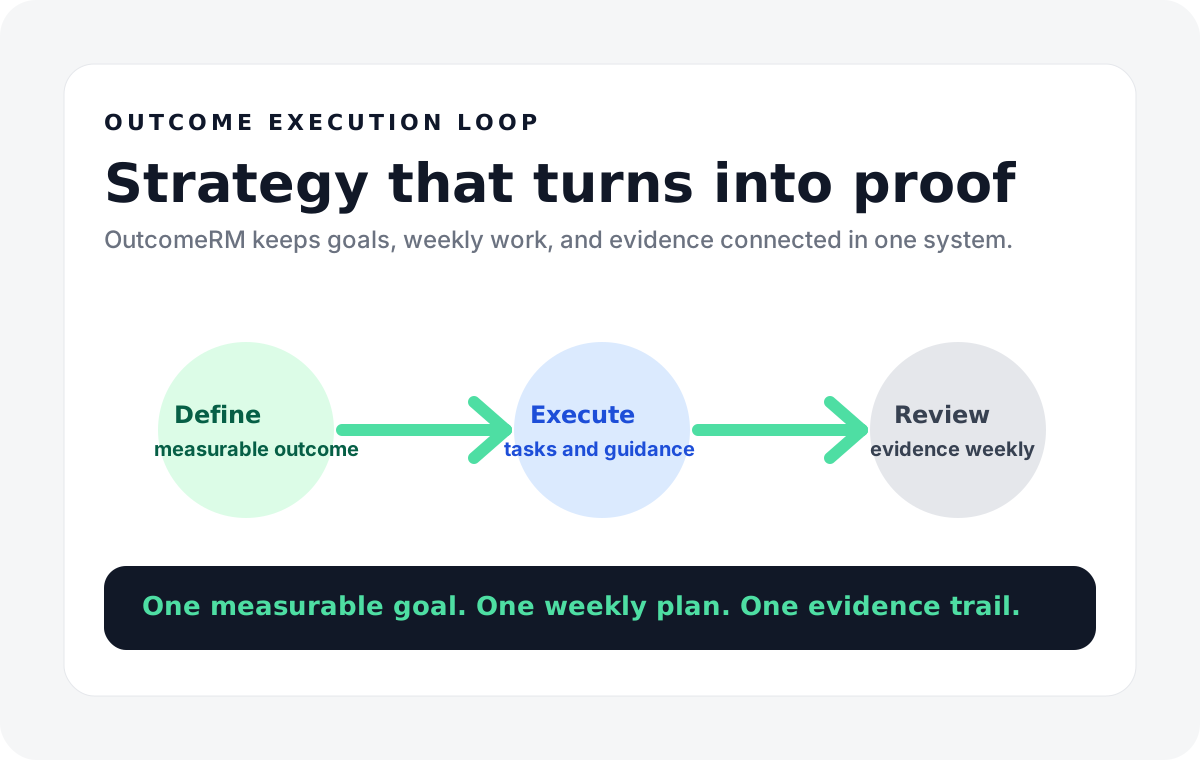
An outcome CRM adds a goal layer above the relationship layer.
Instead of starting with accounts and tasks, it starts with:
- the target outcome
- the timeline
- the leading indicators
- the actions most likely to move those indicators
That changes how the whole system behaves.
1. Goals become operational, not aspirational
A founder goal like "add $50k in MRR" becomes a working system:
- target pipeline needed
- win rate assumption
- number of qualified conversations required
- number of outbound actions needed each week
Now the team can see the chain between daily execution and the number on the board.
2. Priorities stop living in someone's head
In a traditional CRM, the best rep or founder often knows what matters, but that logic is not encoded.
In an outcome CRM, the system can prioritize actions such as:
- follow up with stalled high-intent leads
- revive opportunities with a strong close history
- launch content tied to a current pipeline gap
- push referrals from recently successful customers
That is much closer to how real operators work.
3. Teams learn faster
When actions are tied to outcomes, you can evaluate strategy quality instead of just rep effort.
For example:
- Which outreach channel created the most demos?
- Which task type produced the highest lead-to-opportunity rate?
- Which founder actions produced the fastest movement in pipeline?
That feedback loop is what compounds over time.
A practical example
Assume your goal is to close 8 new customers in 90 days.
A traditional CRM shows which opportunities are open.
An outcome CRM can go further and structure the plan:
- Reverse-engineer how many sales conversations you need.
- Identify the channels most likely to produce those conversations.
- Break the plan into weekly actions.
- Measure which actions are actually increasing close probability.
The result is not just cleaner records. It is better decision-making.
When you should upgrade from a traditional CRM mindset
You probably need an outcome-driven layer if any of these are true:
- your team has goals, but daily work feels reactive
- your forecast slips because leading indicators are unclear
- reps log activity, but managers still cannot diagnose what to do next
- founders are the bottleneck because the strategy is trapped in their head
If that sounds familiar, the fix is not more dashboards. It is a better operating model.
How to implement an outcome CRM without creating tool fatigue
Do not start with a giant migration. Start with one business outcome.
Pick a goal like:
- increase demos booked
- improve proposal-to-close rate
- grow expansion revenue
Then define:
- The target number.
- The leading indicators.
- The repeatable actions that drive those indicators.
- The weekly review cadence.
That is enough to prove whether an outcome-driven system improves execution quality.
FAQ
Is an outcome CRM a replacement for a normal CRM?
For some teams, yes. For others, it is the execution layer that sits on top of the relationship data. The important distinction is that it manages progress toward a target, not just contacts and deal stages.
Who benefits most from an outcome CRM?
Founders, heads of growth, sales leaders, agencies, and local-service operators all benefit when they need to turn a high-level revenue goal into a focused daily plan.
What metric should I start with?
Start with one number that matters commercially, such as qualified pipeline, demos booked, retained revenue, or closed-won deals.
If you want a concrete place to start, explore the OutcomeRM templates or review the pricing page to see how the product is structured around measurable outcomes instead of generic tasks.