AI is powerful, but most people use it too late in the process.
They open a chatbot, ask for "a plan," and get a long list of tasks that sound smart but are disconnected from the real constraint in the business. That is why so many AI-generated plans feel polished and useless at the same time.
The fix is not a better prompt alone. It is a better framework.
The real job of AI in goal setting
AI should not replace judgment. It should help you:
- sharpen the target
- expose assumptions
- generate strategies faster
- create a tighter execution loop
If you do those four things well, AI becomes a multiplier instead of a distraction.
Step 1: Define one measurable outcome
Start with a target that has a number and a deadline.
Bad:
- grow the business
- improve marketing
- get more clients
Better:
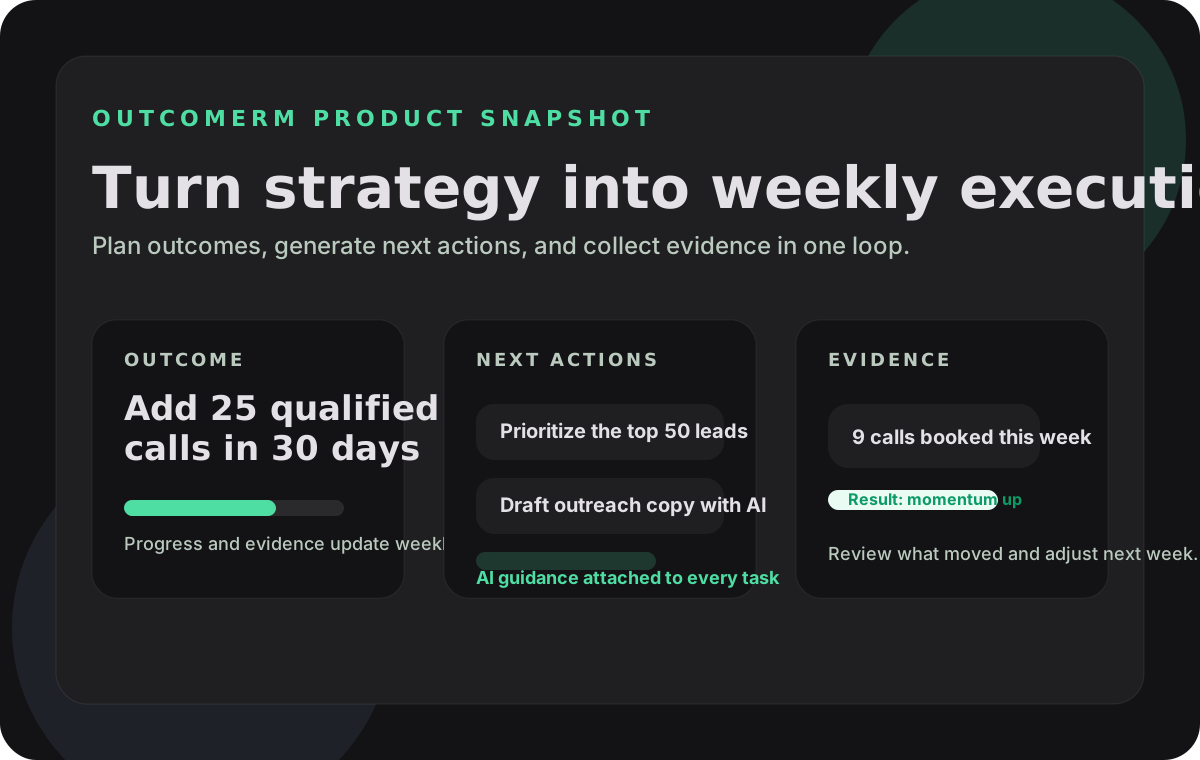
- book 25 qualified sales calls in the next 30 days
- add 40 recurring cleaning customers by July 1
- generate 15 wholesale leads for a bakery this quarter
AI performs better when the target is specific because it can reason around constraints instead of guessing your intent.
Step 2: Give AI the business context it actually needs
Before asking for tactics, provide:
- industry
- audience
- timeline
- budget
- current bottleneck
- existing channels or assets
For example:
"I run a local bakery in Denver. I want to secure 5 wholesale accounts in 90 days. My current strengths are product quality and word of mouth. My bottleneck is outbound lead generation."
That prompt creates a far better plan than "help me grow my bakery."
Step 3: Ask for strategies before tasks
One of the easiest mistakes is asking AI for a to-do list immediately.
Instead, ask for 3 to 5 strategic paths first. That lets you evaluate whether the machine is solving the right problem.
For a founder trying to grow pipeline, AI might propose:
- outbound prospecting
- authority-building content
- partnerships and referrals
- conversion optimization on current traffic
Only after those strategic buckets make sense should you ask for daily actions.
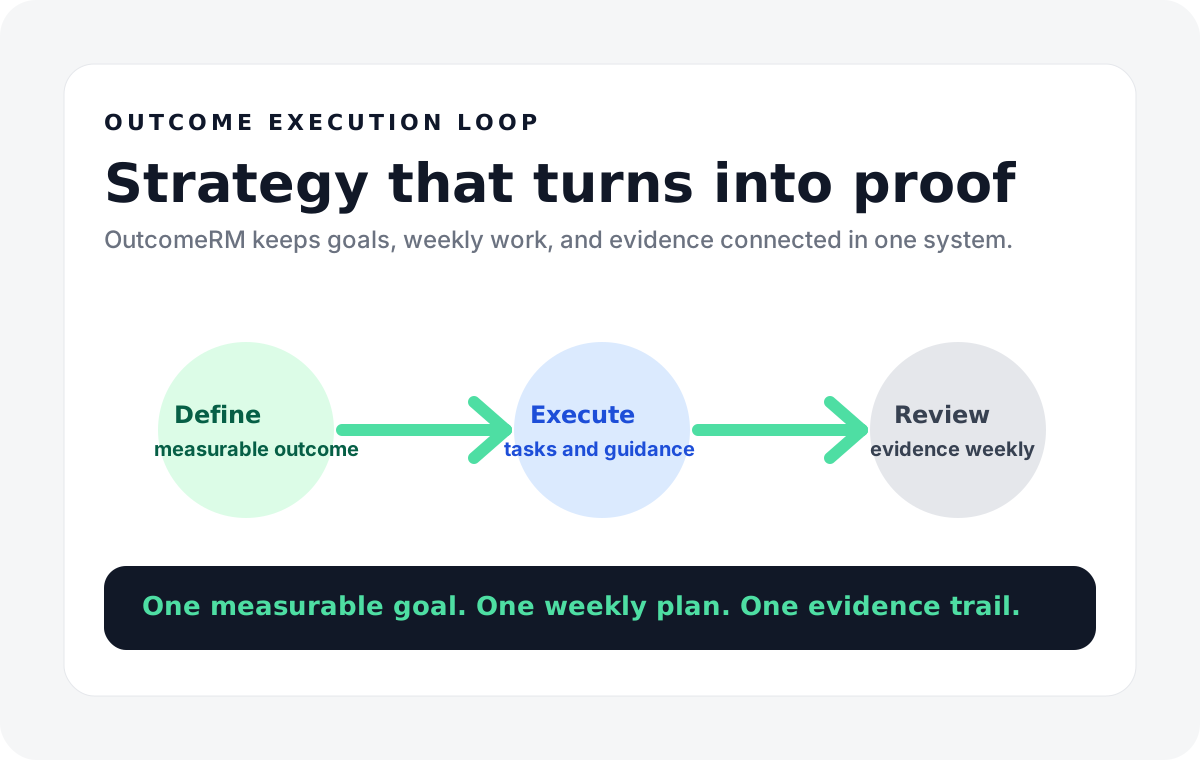
Step 4: Break the plan into a 30-day operating cycle
A strong AI-generated plan should answer:
- what happens this week
- what gets measured
- what success looks like by day 30
That means your plan needs:
Weekly milestones
Examples:
- Week 1: validate messaging and channel assumptions
- Week 2: launch consistent outbound volume
- Week 3: optimize based on response and conversion data
- Week 4: double down on the best-performing actions
Daily priorities
Every day should have a small number of actions with a clear expected output. "Write content" is weak. "Publish one founder-led post aimed at CFO pain points" is usable.
A review loop
Without review, AI planning becomes content generation. With review, it becomes strategy support.
At the end of each week, ask:
- what actually moved the target?
- which assumptions were wrong?
- what should be cut next week?
Step 5: Track leading indicators, not just the final result
If your target is 20 new customers, the final number matters, but it is too late to manage day to day.
Instead, track leading indicators such as:
- outreach volume
- reply rate
- booked calls
- proposal rate
- close rate
AI can help define those indicators, but your job is to keep the plan grounded in business reality.
A simple prompt structure that works
Use this format:
- Goal
- Timeline
- Context
- Constraints
- Desired output
Example:
"My goal is to add 10 recurring B2B cleaning contracts in 90 days. I operate in one metro area, have a modest ad budget, and currently rely on referrals. Give me 4 strategic paths, the key metrics for each, and a 30-day execution plan with daily actions."
That prompt gives AI enough structure to be useful without boxing it into generic advice.
Common mistakes to avoid
Using AI to create volume instead of clarity
More ideas do not equal better strategy. Cut aggressively.
Asking for tactics before defining the constraint
If you do not know whether the problem is awareness, conversion, or retention, the task list will be noisy.
Never revising the plan
The first output is a starting point. The real advantage comes from weekly refinement.
FAQ
How long should an AI action plan be?
Thirty days is usually the sweet spot. It is long enough to create momentum and short enough to adapt quickly.
Can AI help with personal goals too?
Yes, but the strongest business results come when the goal has measurable inputs and outputs.
What if the AI plan feels generic?
The usual cause is missing context. Add your audience, channel constraints, geography, pricing, and current bottleneck.
If you want to see this framework in practice, start with one of the OutcomeRM templates and let the plan evolve from a real target instead of a blank prompt.