Most goal systems fail for one simple reason: they track intent more carefully than they track results.
That is why a team can feel busy, motivated, and organized while still missing the number that actually matters.
Outcome-driven goals fix that problem by starting with a measurable result and then building the execution system backward from it.
What outcome-driven goals actually mean
An outcome-driven goal is a target tied to a concrete result such as:
- booked meetings
- retained customers
- monthly recurring revenue
- qualified leads
- product adoption
The difference is not semantic. It changes how the work is defined.
A vague goal sounds like:
- grow the business
- improve marketing
- be more consistent
An outcome-driven goal sounds like:
- generate 20 qualified sales conversations in 30 days
- add 15 recurring cleaning customers this quarter
- increase onboarding completion from 42 percent to 60 percent by June 30
That shift matters because execution quality improves when the target is measurable.
Why outcome-driven goals outperform standard goal setting
Traditional goal setting often stops at the ambition layer. You define a target, list a few tasks, and hope discipline closes the gap.
Outcome-driven goals go further by forcing four questions:
- What exact result are we trying to create?
- What leading indicators suggest we are moving toward it?
- What actions most directly influence those indicators?
- What evidence will tell us to double down, adapt, or stop?
That is what turns planning into an operating system.
If you want the comparison pages that make this clearer, read Outcome Goals vs Process Goals and Outcome Goals vs Output Goals.
The core structure of an outcome-driven goal
Every strong outcome-driven goal has five parts.
1. A clear outcome
The result needs a number and a deadline.
Examples:
- close 8 new customers in 90 days
- book 25 discovery calls this month
- increase repeat orders by 12 percent this quarter
2. Leading indicators
Leading indicators tell you whether the system is working before the final outcome arrives.
If the outcome is new customers, the indicators might be:
- replies
- qualified calls
- proposals sent
- follow-up completion rate
Without leading indicators, teams only learn after they are already behind.
3. Strategic paths
You usually do not have one route to the target. You have several possible paths:
- outbound outreach
- referrals
- content-led inbound
- partnerships
- community engagement
An outcome-driven goal makes those options visible so effort can be allocated deliberately.
4. Daily execution
This is the layer most teams rush into too early.
Tasks should come after the goal and strategy are clear, not before.
That means the task list is not a random bucket of ideas. It is a controlled output of the outcome system.
5. Feedback and evidence
The point of the framework is not just to do more work. It is to learn which work creates movement.
That means logging:
- what was completed
- what result it produced
- which strategy it belonged to
- whether the plan should be adjusted
This is where most ordinary task tools fall short. They capture completion, but they do not connect completion to the outcome.
A simple example
Imagine a local service founder wants to grow revenue.
A weak goal is:
- get more clients
An outcome-driven version is:
- sign 10 new moving clients in Denver within the next 45 days
Now the system becomes clearer:
- outcome: 10 new clients
- deadline: 45 days
- indicators: calls booked, quote requests, close rate
- strategy options: marketplace presence, local SEO, referrals, neighborhood outreach
- daily tasks: post listings, follow up leads, publish localized content, request reviews
Instead of guessing what matters each morning, the founder now has an execution model.
How AI helps outcome-driven goals work better
AI is useful here, but only when it is grounded in the outcome.
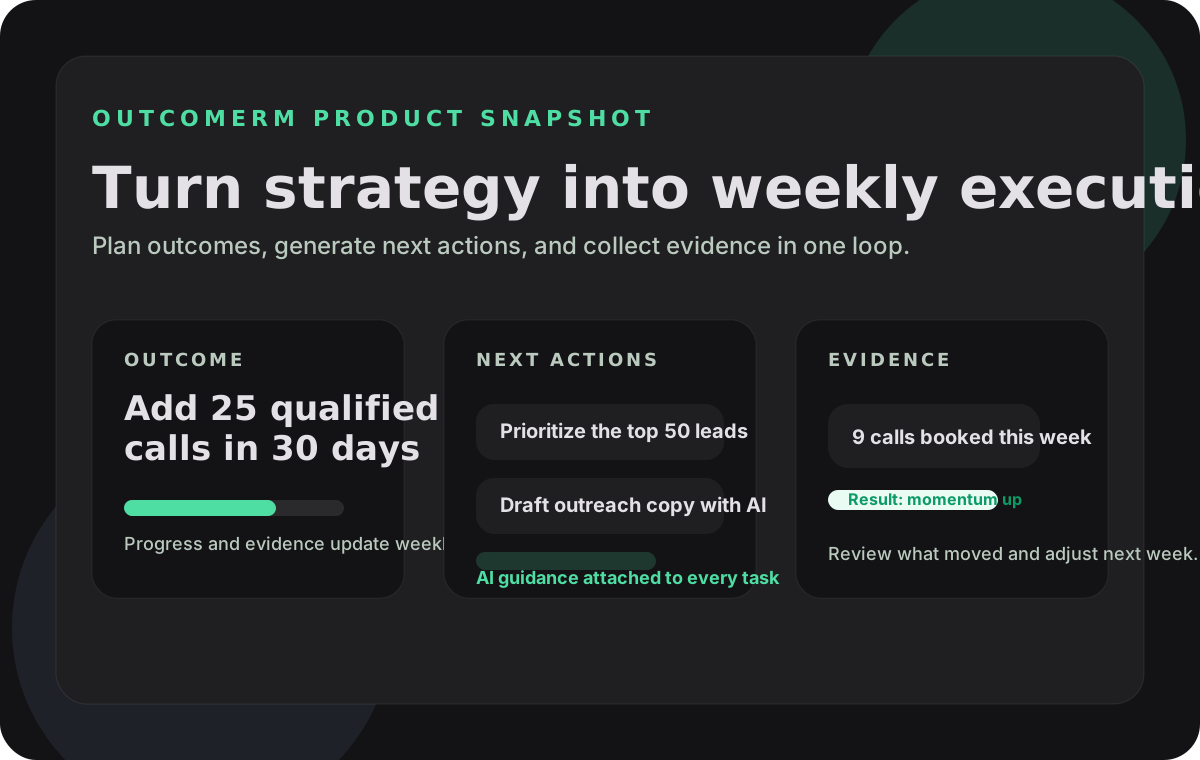
When you give AI a measurable target, it can help:
- propose strategic paths
- generate next-step tasks
- draft outreach or content
- identify missing assumptions
- summarize what is working
What AI should not do is replace the outcome definition itself.
If the goal is vague, the AI output will usually be vague too. If the goal is precise, the machine has something real to optimize around.
That is why outcome-driven goals pair well with AI planning systems. The outcome provides the constraint that makes the assistance useful.
Common mistakes to avoid
Mistake 1: confusing activity with progress
A long task list can feel productive without actually improving the target metric.
Mistake 2: choosing too many outcomes at once
One strong outcome beats five competing priorities.
Mistake 3: skipping the evidence loop
If you never record what the action produced, you lose the learning value of execution.
Mistake 4: writing tasks before defining strategy
Tasks should serve a strategy. They should not substitute for one.
A practical framework you can use today
If you want to create an outcome-driven goal quickly, use this structure:
- Write the result as a number plus a deadline.
- List 2 to 4 indicators that show movement toward the result.
- Identify 3 strategic paths that could influence those indicators.
- Generate the next 5 to 10 tasks from those strategies.
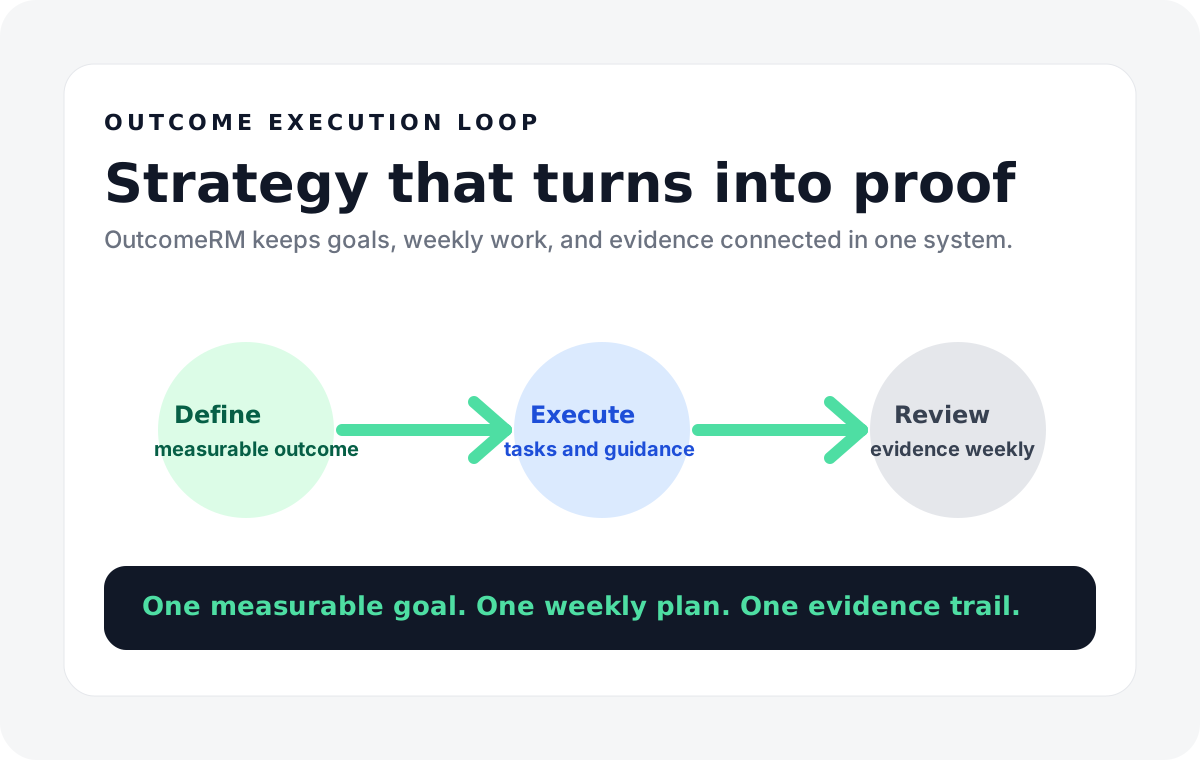
- Review results weekly and adjust the plan using evidence.
That is enough to build a much stronger goal system than a generic to-do list.
Why this matters for founders and operators
Founders and operators do not need more motivational language. They need a system that closes the gap between ambition and execution.
Outcome-driven goals are effective because they make that gap visible.
You can see:
- what you are aiming for
- what should happen next
- what is creating movement
- what needs to change
That is why outcome-driven planning works across sales, growth, operations, hiring, and local business execution.
FAQ
Are outcome-driven goals only for businesses?
No. The framework also works for career goals, skill development, health targets, and other personal goals. The principle is the same: define the result, connect actions to it, and measure what actually moves it.
What is the difference between an outcome-driven goal and a KPI?
A KPI is a metric. An outcome-driven goal is the operating system built around the result. It includes the target, indicators, strategies, tasks, and feedback loop.
What is the best tool for outcome-driven goals?
The best tool is one that connects planning, execution, and results in the same place instead of splitting them across separate systems.
If you want to see what a goal looks like in practice, review 10 Real-World Examples of Outcome Goals.
If you want to see how that works in practice, start with the OutcomeRM templates, compare the pricing page, or read more guides in the OutcomeRM blog.