For many bakeries, wholesale is the fastest path from owner-led hustle to more predictable revenue.
Retail traffic can be uneven. Seasonal launches can spike and disappear. But a small set of steady wholesale accounts can create recurring volume, better production planning, and clearer weekly priorities.
The problem is that most bakeries do not fail at wholesale because the product is weak. They fail because the outreach, follow-up, and account system is inconsistent.
That is why a bakery wholesale growth strategy should be treated like an execution system, not a one-time sales push.
Start with one wholesale target
Do not begin with "grow wholesale."
Begin with a measurable result such as:
- add 5 recurring cafe accounts in 90 days
- increase monthly wholesale revenue from $4,000 to $8,000
- secure 3 specialty retail accounts by the end of the quarter
That target gives the bakery a real operating number to plan against.
If you need the broader business context first, start with Bakery Business Growth Strategy.
If local discovery is the bottleneck instead of account outreach, read Bakery Local SEO Strategy.
If you are still in setup mode and need the operational foundation first, use Bakery Startup Checklist.
Know what makes a strong wholesale offer
A lot of bakeries pitch wholesale too broadly.
Cafe and retail buyers usually care about:
- reliable consistency
- margin-friendly pricing
- products that move quickly
- packaging that fits their shelf or service model
- easy reordering
That means your wholesale offer should be built around products that are:
- operationally repeatable
- easy to transport
- profitable after labor and ingredient costs
- attractive to the buyer's customer base
Do not lead with the full menu. Lead with the products most likely to win and hold the account.
Build a basic wholesale sales kit
Before outreach starts, prepare the minimum assets:
- a one-page line sheet
- clear pricing tiers
- case sizes or order minimums
- simple delivery or pickup terms
- a short sample offer
This is not about polishing a giant deck. It is about removing friction once someone shows interest.
Target the right account types
Bakery owners often waste time pitching every possible business.
A stronger system starts with a focused target list:
- independent coffee shops
- neighborhood cafes
- boutique grocers
- hotels with breakfast service
- offices or hospitality groups with steady food demand
The goal is not list size. The goal is list quality.
Fifty strong targets are more useful than five hundred weak ones.
Use a weekly account pipeline
Wholesale only feels random when it is not managed like a pipeline.
A simple weekly structure works:
- 10 new target accounts researched
- 5 first-touch messages sent
- 3 sample offers delivered
- 5 follow-ups completed
- 1 account review meeting each week
That rhythm keeps momentum visible.
It also makes the real bottleneck easier to find:
- not enough first meetings
- weak sample conversion
- poor follow-up
- pricing mismatch
Sample strategy matters more than most bakeries think
Many bakeries treat samples like a nice gesture.
They should treat samples like a conversion step.
A strong sample process includes:
- only sending samples to qualified targets
- including a short note about best-sellers and reorder logic
- following up within 24 to 72 hours
- asking a concrete next-step question
Weak follow-up sounds like:
- just checking in
Stronger follow-up sounds like:
- which two products felt like the best fit for your current customer mix?
- would a Tuesday and Friday delivery rhythm work better for your team?
- do you want a revised sheet based on your breakfast volume?
That moves the conversation forward.
Track wholesale metrics every week
If you want wholesale to become a growth channel, track the right numbers:
- new target accounts added
- first conversations started
- sample-to-meeting rate
- meeting-to-account conversion
- average monthly revenue per account
- reorder consistency
Those metrics tell you whether the system is improving or just staying busy.
Protect margin while growing accounts
Winning wholesale accounts is not enough if the pricing structure creates stress.
Review:
- ingredient cost by product
- labor time by batch
- packaging cost
- delivery cost
- minimum viable margin by account
A bakery can "grow" wholesale volume and still damage the business if the operational math is weak.
That is why wholesale strategy should sit inside the broader margin and production system described in Bakery Business Growth Strategy.
It also becomes easier to support when local trust signals improve through the tactics in Bakery Local SEO Strategy.
Turn wholesale into a weekly planning loop
This is where most bakery growth systems break.
The owner knows wholesale matters, but the work gets buried under production, retail needs, and day-to-day problems.
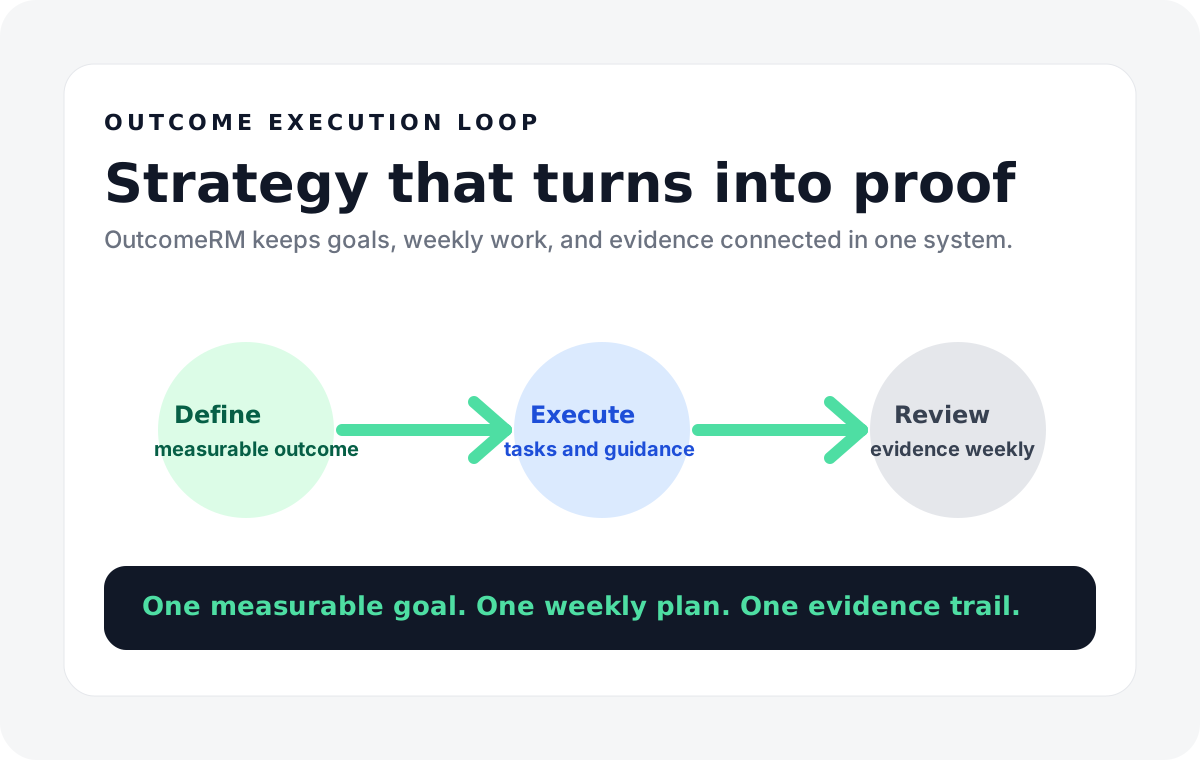
A better weekly loop looks like this:
- choose the wholesale target
- review current pipeline
- assign outreach and follow-up actions
- log responses, meetings, and wins
- decide what to double down on next week
That is what turns a sales idea into a repeatable channel.
Example 30-day wholesale sprint
Here is a simple 30-day sprint a bakery could run:
Week 1
- define top 3 wholesale-ready products
- build a target list of 25 accounts
- prepare line sheet and sample offer
Week 2
- start outreach
- schedule sample drops
- record objections and interest patterns
Week 3
- follow up every warm lead
- refine the offer based on buyer feedback
- push for first trial order
Week 4
- review which target type converted best
- tighten the list
- standardize the follow-up sequence
That is enough to learn a lot faster than waiting for wholesale growth to happen passively.
Final takeaway
Bakery wholesale growth is not just about finding more buyers.
It is about building a measurable account system:
- target accounts
- qualified sample process
- consistent follow-up
- margin discipline
- weekly review
That is how wholesale becomes a real growth engine instead of an occasional win.
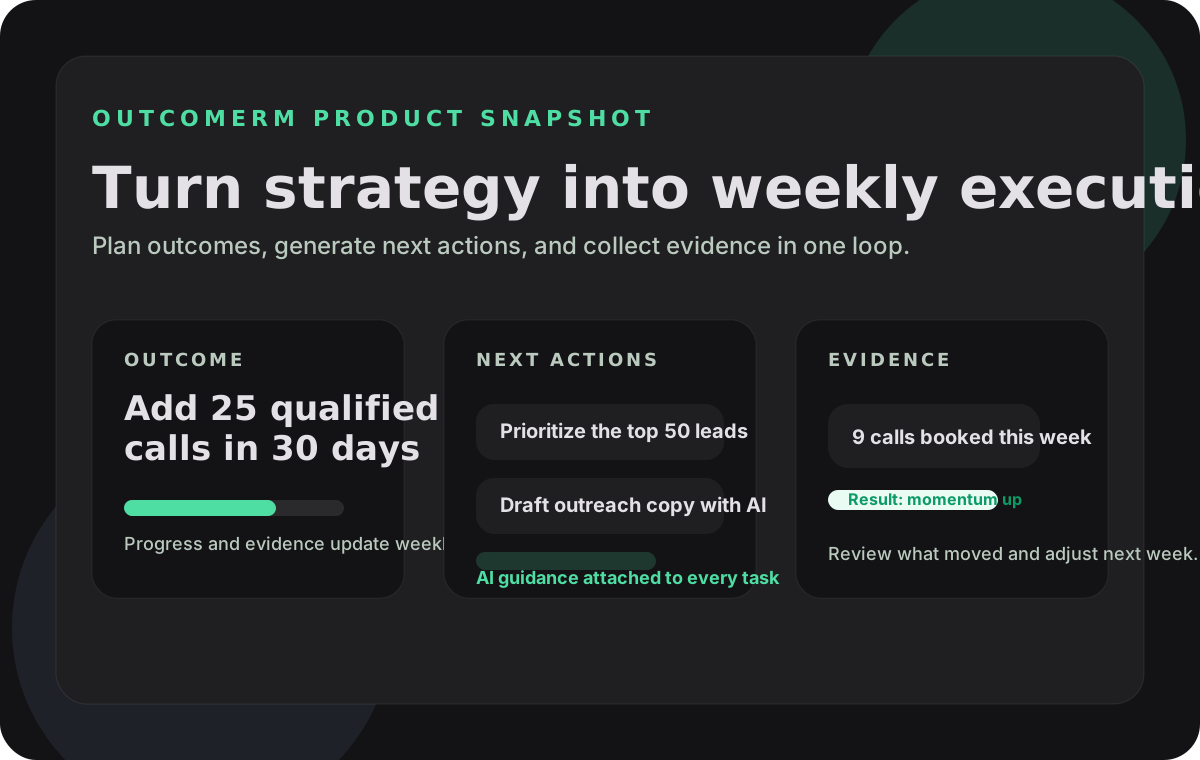
If you want to turn this into a live planning workflow, start with the OutcomeRM templates, review the core planning model in Outcome-Driven Goals, use the broader Bakery Business Growth Strategy as the parent guide, and connect it to demand capture through Bakery Local SEO Strategy.