Many teams think they are outcome-oriented because they are measuring something.
But there is a big difference between tracking output and tracking outcomes.
That difference matters because output can look productive without actually proving that the business result improved.
If you want stronger weekly planning, better KPI reviews, and fewer activity traps, you need to know where output goals belong and where outcome goals should lead.
Quick definition
- Outcome goals measure the result created.
- Output goals measure the thing produced.
An output goal might be:
- publish 12 articles this quarter
- send 200 cold emails this month
- post 30 short videos in 30 days
An outcome goal might be:
- generate 40 qualified inbound leads this quarter
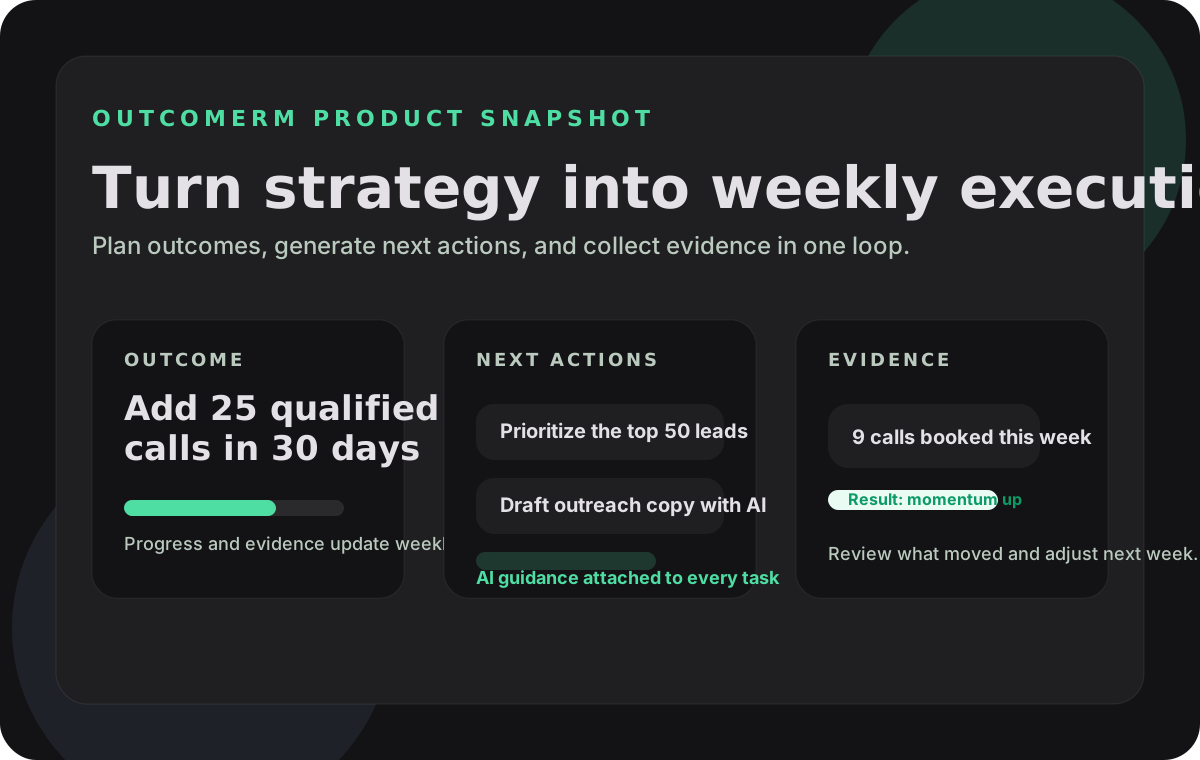
- book 25 sales conversations this month
- increase qualified demo requests by 20 percent in 30 days
One tracks production. The other tracks the business effect.
Why output goals feel safer
Teams often prefer output goals because they are easier to control.
You can decide to write 3 blog posts. You cannot force 40 qualified leads to happen on demand.
That makes output goals useful for planning effort, but dangerous if they become the main target. When that happens, teams start optimizing for volume instead of effect.
Where output goals belong
Output goals are still useful. They belong below the outcome, not above it.
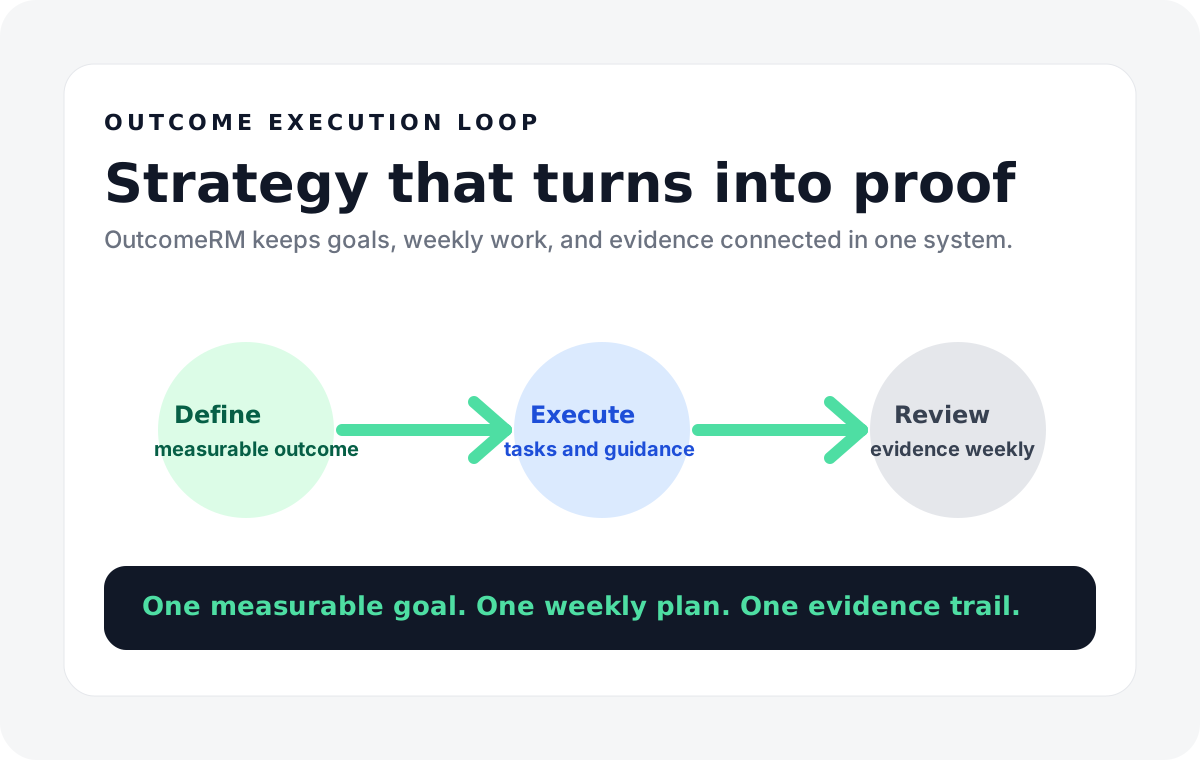
Here is the correct hierarchy:
- Outcome goal
- Leading indicators
- Output targets
- Weekly tasks
Example:
- outcome goal: generate 20 qualified sales conversations in 30 days
- leading indicators: reply rate, meeting conversion, follow-up rate
- output target: send 150 personalized outbound messages
- weekly tasks: build list, send messages, follow up, refine offer
That structure keeps production tied to a real result.
The weekly planning mistake most teams make
The common error is starting with output.
The team says:
- let's ship more content
- let's send more outreach
- let's launch more campaigns
But they skip the harder question:
Which result are we trying to create, and how will we know the work is actually moving it?
That is why many teams stay busy and still miss the target.
Outcome goals create better decision-making
When the outcome is clear, output becomes easier to judge.
If your outcome is booked sales conversations, you can evaluate content not by volume, but by:
- form fills
- demo requests
- qualified replies
- conversion to sales conversations
Now the team can tell whether the output deserves more investment.
Output goals still matter in execution
You should not delete output goals from the system. You should demote them.
Good output goals help with:
- team accountability
- execution pacing
- weekly workload planning
- production expectations
But they should always serve a measurable result.
A side-by-side example
Weak planning model
- goal: publish 20 articles this quarter
- success definition: articles shipped
Stronger planning model
- outcome goal: generate 60 qualified organic leads this quarter
- output goal: publish 20 search-driven articles tied to high-intent queries
- weekly review: impressions, clicks, CTA clicks, signups
Now the content team can still work from a production target, but the business knows what the work is supposed to create.
Final takeaway
Output goals are useful. They are just not enough.
If you want stronger execution, the outcome should lead and the output should support it.
That is the model behind Outcome-Driven Goals: A Practical Framework for Turning Ambition Into Measurable Execution, the comparison in Outcome Goals vs Process Goals, and the examples in 10 Real-World Examples of Outcome Goals.
If you want to apply this structure in a live workflow, start with the OutcomeRM templates or compare plans on the pricing page.