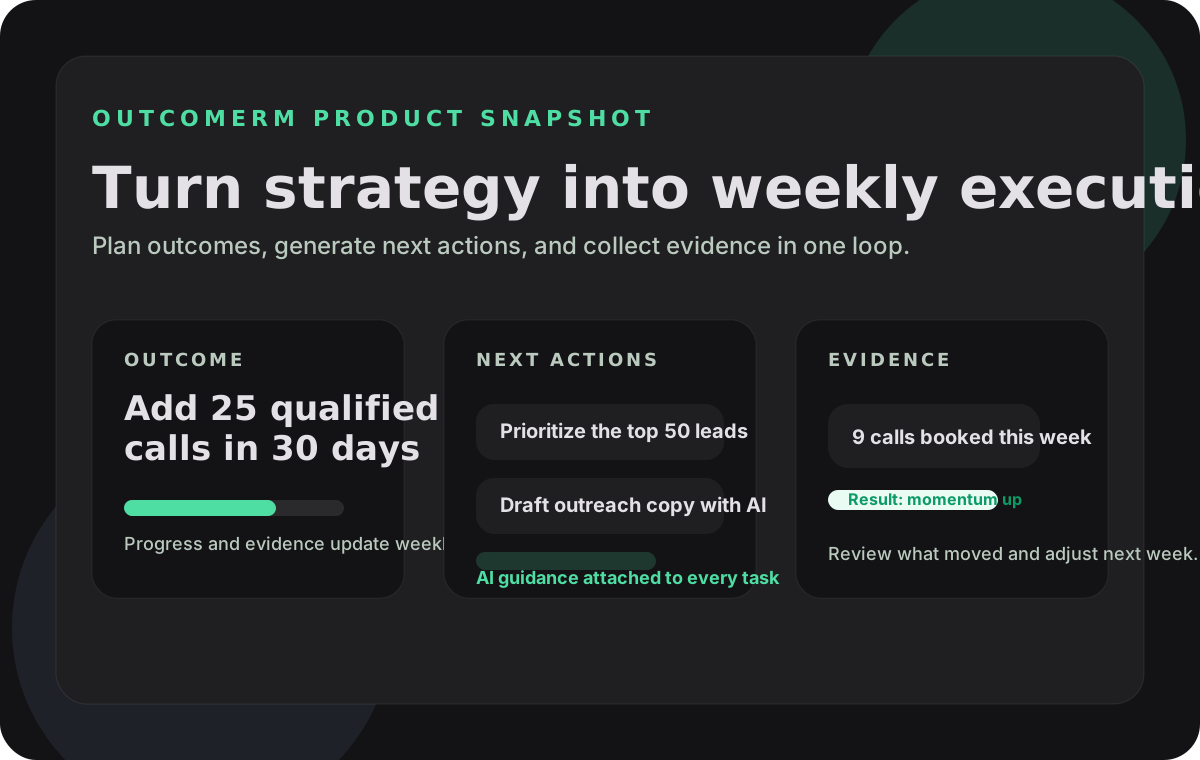
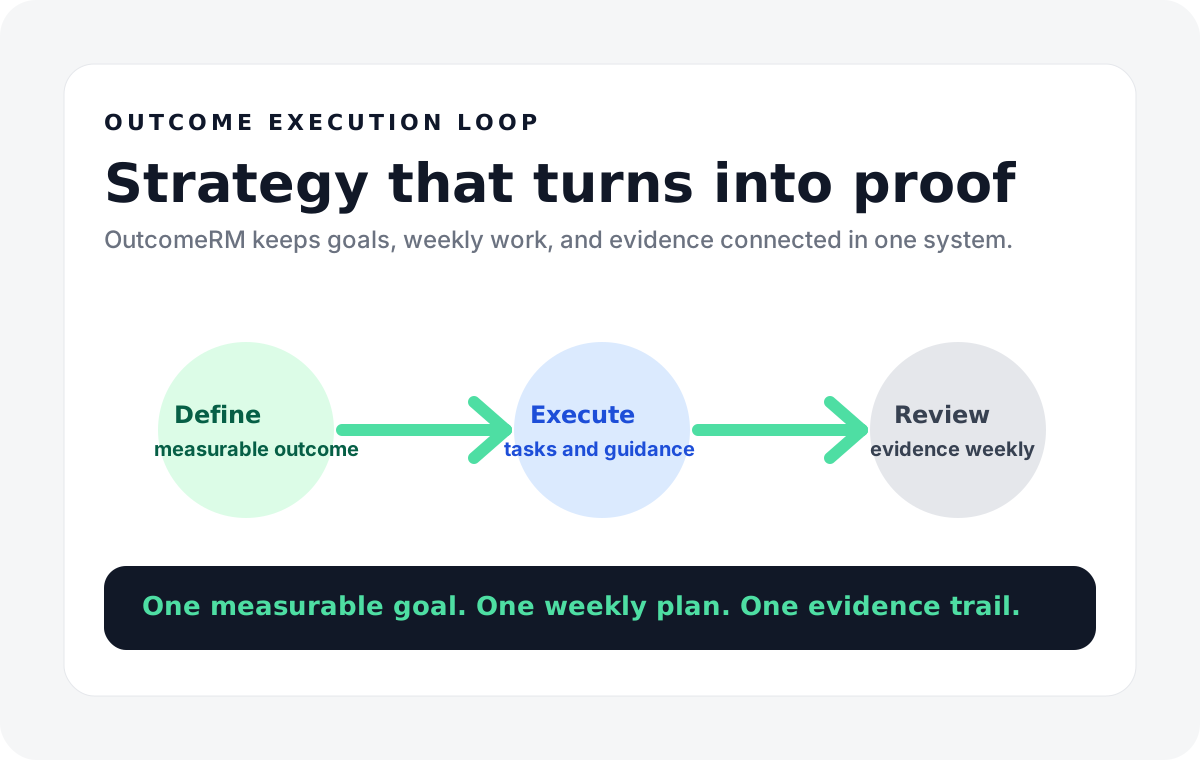
Most teams do not need more ambition. They need better translation.
The problem is usually not the target itself. The problem is that the target never gets turned into something measurable, reviewable, and actionable every week.
That is where strong outcome goals help.
Outcome goals define the result clearly enough that a team can track movement, assign owners, and collect proof of progress. A vague target like "improve performance" becomes a working system with a metric, a baseline, a deadline, and a weekly execution rhythm.
Below are 10 real-world examples of outcome goals across business, education, health, sports, and career development. Each example is written so you can adapt it into a scorecard, weekly review, or execution plan.
What makes a strong outcome goal?
Before the examples, keep four rules in mind:
- Start with one measurable result.
- Record the baseline so improvement is realistic.
- Add a deadline so the work has urgency.
- Pair the outcome with a few weekly signals so you can spot slippage early.
That is what makes an outcome goal useful in real operations instead of just sounding good in a document.
Business examples
1. Increase quarterly sales revenue
Outcome goal: Increase quarterly sales revenue by 15% by the end of Q3, using last quarter as the baseline.
Primary KPI: Quarterly revenue
Weekly signals to watch:
- pipeline value
- qualified demos booked
- proposal-to-close rate
Why this works: It ties the revenue result to a clear time window and gives leadership a small set of weekly indicators that predict whether the quarter is on track.
2. Reduce the sales cycle while adding clients
Outcome goal: Reduce average sales cycle length from six months to three months while adding 15 new clients by the end of Q4.
Primary KPI: Average deal cycle length
Weekly signals to watch:
- demo-to-close conversion
- open deal age
- qualified opportunities added
Why this works: It forces the team to improve speed and volume at the same time, which is often how real growth targets behave.
Education examples
3. Improve program enrollment and completion
Outcome goal: Enroll 120 student leaders by September 30 and maintain an 80% completion rate with average satisfaction of at least 4.2 out of 5.
Primary KPI: Completion rate
Weekly signals to watch:
- new enrollments
- lesson completion
- student satisfaction feedback
Why this works: It protects against the common mistake of celebrating signups while ignoring whether learners actually finish and find value.
4. Shorten learner onboarding time
Outcome goal: Reduce average learner onboarding time from 10 days to 7.5 days by December 31, measured as days to first success.
Primary KPI: Days to first success
Weekly signals to watch:
- funnel drop-off by step
- early activation rate
- completion of the first checklist
Why this works: It makes the early user journey measurable and gives the team a clear operational definition of success.
Health examples
5. Grow active wellness participation
Outcome goal: Increase active participants in a wellness program from 120 to 138 within six months.
Primary KPI: Active participants per month
Weekly signals to watch:
- attendance rate
- return participation
- reminder response rate
Why this works: It defines participation in behavioral terms, which makes testing messaging and attendance interventions much easier.
6. Raise wellness satisfaction
Outcome goal: Increase average wellness satisfaction from 3.6 to 4.5 by the end of Q4 using quarterly pulse surveys.
Primary KPI: Satisfaction score
Weekly signals to watch:
- pulse response rate
- benefit usage
- attendance at optional sessions
Why this works: It turns feedback into an outcome the team can influence instead of a vague aspiration about employee experience.
Sports examples
7. Improve team win rate
Outcome goal: Raise team win rate from 60% to 75% within one season by ensuring each athlete completes six planned drills per week.
Primary KPI: Team win rate
Weekly signals to watch:
- drill completion
- practice attendance
- coach compliance reviews
Why this works: It connects match outcomes to measurable training behavior rather than relying on motivation alone.
8. Reduce athlete recovery time
Outcome goal: Reduce average recovery time from seven days to five days within four months by standardizing load, sleep, and rehab protocols.
Primary KPI: Days to full readiness
Weekly signals to watch:
- readiness scores
- injury rate
- sleep compliance
Why this works: It makes recovery an operational target instead of a subjective coaching concern.
Career examples
9. Link leadership development to business impact
Outcome goal: Complete an emerging leaders program and deliver $250,000 in revenue attributable to initiatives you lead by December 31.
Primary KPI: Revenue attributed to owned initiatives
Weekly signals to watch:
- modules completed
- stakeholder meetings run
- initiative progress updates
Why this works: It pairs professional development with business evidence, which makes promotion conversations far stronger.
10. Earn certification and prove cross-functional impact
Outcome goal: Earn a role-relevant certification within 12 months and lead two cross-functional projects that improve a chosen metric by at least 10%.
Primary KPI: Improvement in the selected business metric
Weekly signals to watch:
- study progress
- milestone completion
- stakeholder satisfaction
Why this works: It balances skill development with visible impact, which is what most promotion cases are actually judged on.
How to turn any target into an outcome goal
If you want to build your own version, use this five-step framework:
- Name the result clearly.
- Choose the single metric that proves progress.
- Record the current baseline.
- Set a realistic numerical target.
- Add a deadline and define the weekly signals.
That gives you a goal you can review every week without guessing what progress means.
A useful sentence starter is:
By [date], increase [metric] from [baseline] to [target], measured by [primary KPI].
Then add:
- owner
- next milestone
- two priority tasks for the week
- one piece of evidence you expect to collect
Outcome KPIs vs process KPIs
One of the most important practical lessons is that outcome goals work best when paired with process indicators.
For example:
- revenue is the outcome KPI
- demos booked is a leading KPI
- follow-up completion is a process KPI
If you only track the result, you learn too late.
If you only track activity, you can stay busy without moving the result.
The best execution systems review both every week.
How to use these examples in weekly planning
Do not turn all 10 examples into active priorities at once.
Pick one that matches your real constraint, then break it into:
- one milestone for the next 30 days
- one owner
- two to five concrete tasks
- one evidence check for the weekly review
That is the point where a goal stops living in a slide deck and starts behaving like an operating system.
If you want a stronger foundation first, read Outcome-Driven Goals: A Practical Framework for Turning Ambition Into Measurable Execution. If you want to understand the scorecard logic, read Outcome Goals vs Process Goals and Outcome Goals vs Output Goals.
If you want a ready-made setup, start with the OutcomeRM templates or compare the pricing page to see how the platform supports measurable weekly execution.