
If you are searching for marketing strategies for a cleaning business, the goal is not to collect a giant list of ideas.
The goal is to find the few strategies that reliably create:
- qualified local leads
- faster bookings
- more recurring clients
- better customer lifetime value
That is the difference between a marketing strategy and a growth system.
Quick answer
The best marketing strategies for a cleaning business are usually:
- Google Business Profile optimization
- neighborhood and service-specific landing pages
- review generation after great cleans
- fast quote follow-up
- referral asks from happy clients
- reactivation campaigns for old leads
- recurring-plan offers after the first clean
- local partnerships
- outbound outreach for commercial contracts
You do not need to do all nine at once. You need to run the right few every week and track which ones create recurring revenue.
1. Google Business Profile should be your first local demand engine
For most cleaning companies, Google Business Profile is the highest-intent channel because buyers are already looking for help.
Focus on:
- accurate service categories
- strong photos
- review velocity
- fast replies to questions
- consistent updates
This is often the highest-leverage strategy for residential cleaning demand.
2. Build neighborhood and service-specific pages
Do not rely on one generic services page.
Create pages around:
- house cleaning in your target neighborhoods
- move-out cleaning
- deep cleaning
- office cleaning
- post-construction cleanup
That structure gives Google more specific reasons to match your business to real buyer intent.
3. Turn every strong job into a review opportunity
Reviews are not just trust signals. They are part of the growth engine.
Create a simple weekly system:
- ask after a strong service experience
- send the link immediately
- follow up once if needed
- tag which technicians or job types create the best review response
That gives you more proof and better local conversion over time.
4. Make fast quote follow-up a marketing strategy
Many cleaning businesses think they need more leads when the real issue is response time.
If you reply to quote requests slowly, you lose buyers who already had intent.
Use a standard:
- respond within 15 minutes during business hours
- follow up same day if no reply
- send one reminder the next day
That often improves bookings without buying a single extra lead.
5. Ask for referrals every week
Cleaning is a trust-heavy service. Referrals work because people want validation before letting someone into their home or office.
A simple referral system can be:
- thank-you message after service
- review request
- referral ask
- small incentive or credit for successful referrals
Consistency matters more than complexity here.
6. Reactivate old leads and one-time customers
There is usually revenue sitting in the old pipeline.
Run a weekly reactivation list:
- quotes that never closed
- one-time deep-clean customers
- seasonal clients who have not returned
- move-out clients who may know new prospects
A short email or text campaign can recover demand that is already warm.
7. Offer recurring plans immediately after a great first clean
One of the best cleaning business marketing strategies is not more acquisition.
It is making the recurring option obvious right after trust has been established.
Use:
- weekly or biweekly pricing
- simple plan choices
- reminder timing before the next ideal clean
- bundle offers that make repeat service easy
If you want the full retention playbook, read How to Improve Customer Retention in a Cleaning Business.
8. Build local partnerships
Good local partnerships for cleaning businesses include:
- real estate agents
- property managers
- apartment locators
- home organizers
- stagers
- office managers
These partners can create more consistent demand than random ad spend if you maintain regular follow-up.
9. Use outbound only when the target is clear
Outbound works best for:
- commercial cleaning
- office cleaning
- property management groups
- recurring B2B accounts
It usually does not work as well when the offer is generic and the list is weak.
If you want the full commercial outreach system, read Outbound Marketing for Cleaning Companies.
Action to expected result examples
Use this format when planning:
- publish a neighborhood page -> more impressions for local cleaning searches
- ask 5 clients for reviews each week -> stronger Google Map trust
- follow up every quote within 15 minutes -> higher booking rate
- send one referral ask sequence weekly -> more low-cost leads
- recontact past one-time customers -> more repeat bookings
That is how a strategy becomes measurable instead of theoretical.
How to prioritize these strategies
For most small cleaning businesses, the order is:
- Google Business Profile
- review generation
- quote follow-up speed
- recurring-service offer
- referral loop
- neighborhood pages
Commercial outreach should come earlier only if your target customer is already B2B.
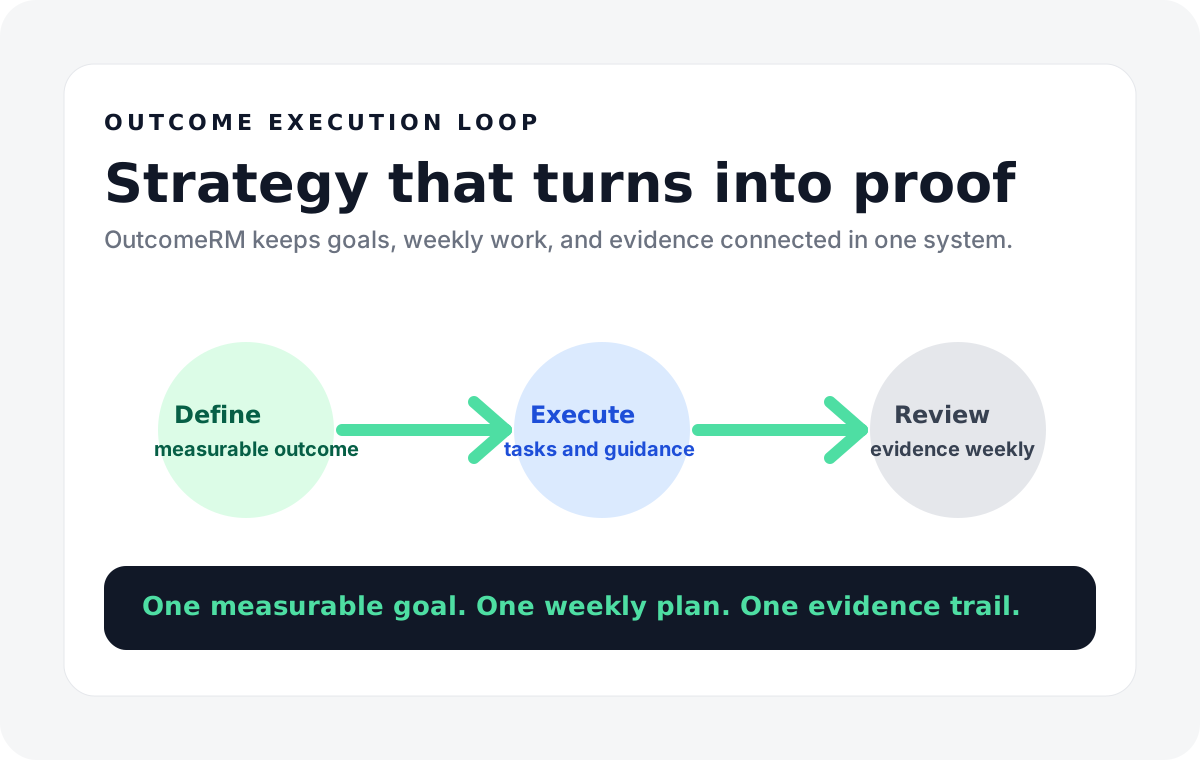
Turn strategies into a weekly system
This is where most marketing plans break.
Instead of writing:
- improve local visibility
write:
- publish one service-area page this week
- request five reviews
- follow up every open quote same day
- send one reactivation message to 20 old leads
- ask 10 active clients for referrals
That is the execution layer OutcomeRM is built around.
Final takeaway
The best marketing strategies for a cleaning business are not the ones that sound sophisticated.
They are the ones you can run every week, measure honestly, and connect to recurring revenue.
If you want to turn these strategies into tasks, KPIs, and weekly reviews, start with the OutcomeRM templates, then go deeper with Marketing Plan for a Cleaning Business and Cleaning Business Marketing Strategy.
If your next question is specifically how to get more sales from the leads you already have, read How to Get More Sales for My Cleaning Business.
If you want the sibling page targeting the exact "increase sales" angle, read How to Increase Sales in a Cleaning Business.